Ah, the Single Drip Coffee Maker. For many of us, it’s the quiet hero of the kitchen, promising a perfect cup of coffee tailored just for us, without the fuss of a full pot or the wait at a busy coffee shop. As someone who’s spent over 15 years immersed in the world of specialty coffee, I’ve seen these machines evolve from simple manual drippers to sophisticated, smart devices. And let me tell you, the journey to that ideal single cup is an exciting one.
In our fast-paced lives, the desire for convenience often clashes with the yearning for quality. The single drip coffee maker brilliantly bridges this gap, offering a personalized brewing experience that respects both your time and your taste buds. Whether you’re a seasoned coffee enthusiast or just beginning your coffee journey, understanding the nuances of these compact marvels can truly elevate your daily ritual.
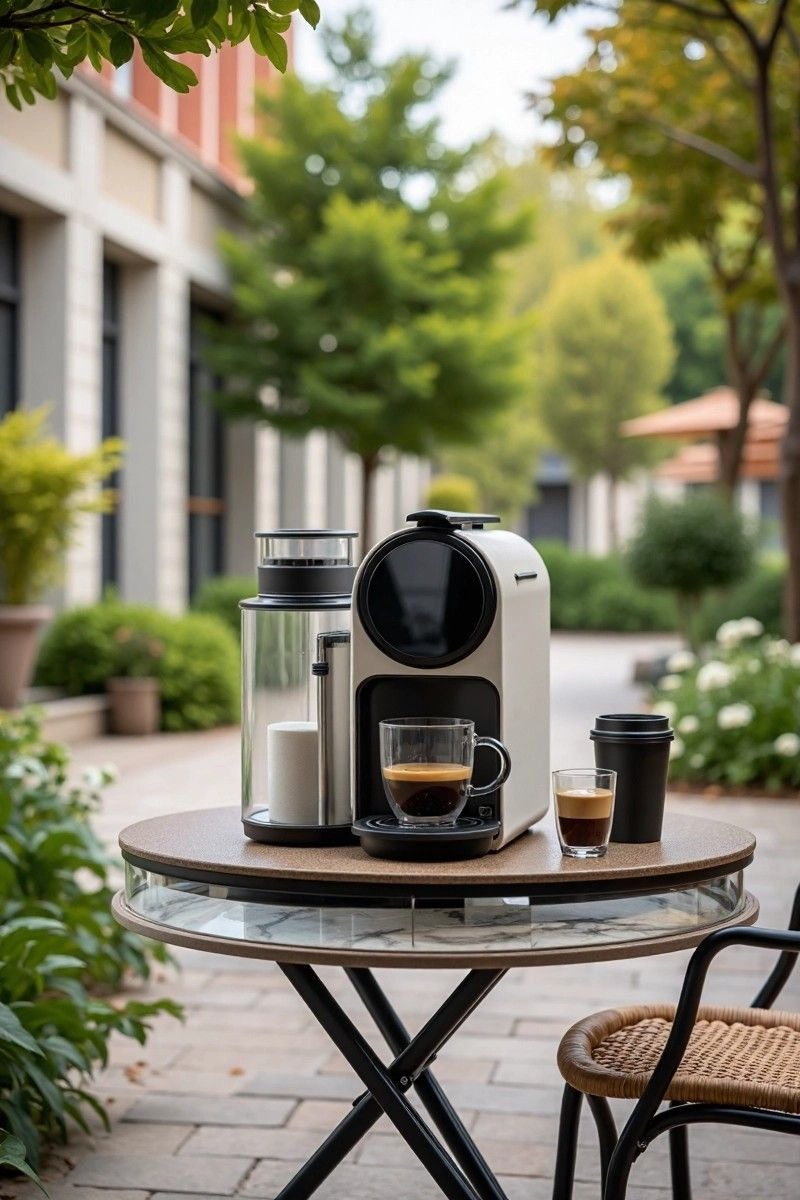
A Rich History in Every Drop: The Evolution of Drip Coffee
To truly appreciate the modern single drip coffee maker, it’s worth taking a quick peek back in time. The very concept of drip coffee owes a great deal to a resourceful German housewife named Melitta Bentz. In 1908, dissatisfied with the muddy grounds in her coffee, she poked holes in a brass pot and lined it with blotting paper – thus, the paper coffee filter was born, revolutionizing the clarity and taste of brewed coffee. This simple yet profound innovation laid the groundwork for all subsequent drip brewing methods.
Fast forward to 1954, and Gottlob Widmann introduced the Wigomat, the world’s first electric drip coffee maker, in Germany. This machine automated the process, bringing unprecedented ease to home brewing. The 20th century saw a steady rise in the popularity of automatic drip coffee makers, largely replacing the often over-extracting percolator. Then, in the 2000s, the landscape shifted dramatically with the advent of single-serve pod systems like Keurig and Nespresso, prioritizing speed and ultimate convenience.
However, the story doesn’t end there. Alongside these automatic innovations, there’s been a beautiful resurgence of manual single-cup pour-over methods, allowing enthusiasts to reclaim a more hands-on, artisanal approach to their daily brew. From humble beginnings to high-tech marvels and back to artisan craft, the single drip coffee maker has a fascinating lineage, all dedicated to delivering that perfect, personal cup.
Decoding Your Daily Dose: How Single Drip Coffee Makers Work
At its core, a single drip coffee maker is designed to deliver hot water over ground coffee, allowing gravity to do the work as the water extracts flavor and then drips into your mug. But the “how” varies beautifully depending on the type of machine.
The Manual Art of Pour-Over
Think of a classic pour-over dripper like the Kalita Wave 155 or a Hario V60. Here, you’re the barista. You heat the water separately, then carefully pour it over a bed of freshly ground coffee nestled in a filter. The water saturates the grounds, slowly drawing out those delicious compounds before passing through the filter and into your waiting cup. It’s a dance of water, coffee, and gravity, giving you immense control over the final flavor.
The Automated Convenience of Electric Brewers
Electric single drip coffee makers, whether they use pods or your own grounds, take much of the guesswork out. Typically, you fill a water reservoir, and a heating element quickly brings the water to the ideal brewing temperature. A pump then moves this hot water through tubes to a spray head, which evenly disperses the water over the coffee grounds in a brew basket. The brewed coffee then drips directly into your mug, often kept warm by a small hot plate if it’s a more traditional model, or simply ready to drink if it’s designed for immediate consumption.
Some advanced automatic models even feature technologies like multi-stream water dispersion, ensuring every single coffee particle is evenly saturated for optimal extraction. This commitment to precision, even in a compact machine, is what truly sets many modern single drip coffee makers apart.
Your Perfect Match: Exploring Types of Single Drip Coffee Makers
The world of single drip coffee makers is wonderfully diverse, offering options for every preference and lifestyle. Let’s explore the main categories:
1. Manual Pour-Over Drippers
These are the purist’s choice, embodying a minimalist design with maximum flavor control.
- Examples: Kalita Wave 155, Chemex Funnex, Hario V60.
- How they shine: They allow you to meticulously control water temperature, pour rate, and bloom time, resulting in an exceptionally clean, nuanced cup that highlights the coffee’s origin characteristics. Many coffee professionals, like my colleague Sarah Jenkins, a certified Q Grader, often advocate for pour-over. “For a single cup, nothing beats the clarity and control of a well-executed pour-over,” she notes. “It’s a meditative experience that truly lets the coffee speak for itself.”
- Best for: Those who enjoy the ritual of brewing, appreciate subtle flavors, and don’t mind a few extra minutes in their morning routine.
2. Automatic Drip (Single Serve)
These machines prioritize speed and ease, perfect for busy mornings.
- Pod-Based Systems (e.g., Keurig K-Mini, Nespresso Vertuo/Essenza Mini): These are the kings of convenience. You simply pop in a pre-filled coffee pod (K-Cup, Nespresso capsule), press a button, and voilà! Coffee in under a minute.
- Pros: Incredible speed, no messy grounds to clean, vast variety of coffee and tea options (especially with Keurig), and some Nespresso machines even offer espresso-style drinks. Many models are incredibly compact, ideal for small spaces.
- Cons: Higher recurring cost for pods, environmental concerns with single-use plastics (though many brands offer recyclable options or reusable pods), and some coffee aficionados find the flavor less robust or complex compared to freshly ground beans.
- Grounds-Based Automatic (e.g., Ninja Specialty Coffee Maker, some Cuisinart models): These give you the automation of a machine but the freedom to use your favorite freshly ground beans.
- Pros: Flexibility to choose any coffee, often come with more features like brew strength control, multiple cup sizes, and even built-in milk frothers for lattes and cappuccinos. They offer a good balance of convenience and customization.
- Cons: Still require scooping grounds and cleaning a reusable filter, can be larger than pod-only machines.
3. Immersion Drippers (Hybrid Brewers)
These brewers offer a fascinating blend of immersion and drip brewing, giving you the best of both worlds.
- Examples: AeroPress, Hario Switch V60 Immersion Dripper.
- How they shine: They allow the coffee grounds to steep fully in hot water (like a French press) before being released through a filter (like a pour-over). This method often results in a full-bodied cup with great clarity and minimal sediment. The Hario Switch V60, for instance, lets you switch between full immersion and traditional pour-over with a simple valve, making it incredibly versatile.
- Best for: Coffee lovers who want a rich, full-flavored cup with the cleanliness of a filter, and enjoy experimenting with different brew styles. They are also often highly portable, making them great travel companions.
Choosing Your Perfect Single Drip Coffee Maker
With so many excellent options, how do you pick “the one”? Consider these factors to find your ideal single drip coffee maker:
- Brewing Preferences: Do you crave a clean, bright cup that highlights subtle notes, or a rich, full-bodied brew? Pour-overs excel at clarity, while immersion methods deliver body. Pod systems offer consistency, though often with a slightly different flavor profile.
- Convenience vs. Control: If speed is paramount, a pod-based automatic machine is hard to beat. If you enjoy the ritual and fine-tuning, a manual pour-over or a hybrid immersion dripper will be more satisfying. Grounds-based automatics offer a good middle ground.
- Space & Portability: Living in a small apartment or need coffee on the go? Compact Keurig K-Mini or an AeroPress could be perfect. Larger multi-function machines like the Ninja Specialty might need more counter space.
- Budget: This includes both the initial machine cost and ongoing expenses for pods, filters, and coffee. Pod machines can be inexpensive upfront but add up over time with proprietary pods. Manual drippers are often very affordable, with low recurring costs.
- Versatility: Do you want just black coffee, or do you dabble in iced coffee, lattes, or espresso-style drinks? Some machines offer a wider range of brewing options and accessories like milk frothers.
- Maintenance: Consider how easy it is to clean. Pod machines typically require less daily cleanup, while manual brewers have parts that need rinsing after each use. Automatic machines will also require periodic descaling.
Mastering Your Single Cup: Expert Brewing Tips
Even the best single drip coffee maker needs a little love to produce its finest brew. Here are my top tips for consistently excellent single cups:
- The Golden Ratio: A general guideline is 1 gram of coffee for every 15-18 grams of water. For a typical 8-ounce (236ml) cup, that’s roughly 13-15 grams of coffee. Experiment to find your sweet spot!
- Freshly Ground, Always: This is perhaps the single most impactful tip. Coffee loses its aromatic compounds rapidly after grinding. Invest in a good burr grinder and grind your beans just before brewing.
- Grind Size Matters:
- Fine-medium for most automatic drip machines.
- Medium for pour-overs.
- Medium-coarse for immersion brewers like AeroPress.
If your coffee tastes weak, try a finer grind; if it’s bitter, try a coarser grind.
- Water Quality is Key: Your coffee is 98% water, so use good quality, filtered water. Avoid tap water with strong odors or flavors.
- Temperature Control: The ideal brewing temperature is typically between 195°F and 205°F (90-96°C). Boiling water can “scorch” the coffee, while too cool water leads to under-extraction. Most automatic machines are calibrated for this, but for manual pour-overs, a kettle with temperature control is a game-changer.
- Pre-wet Your Filter (for pour-over): If using a paper filter, rinse it with hot water before adding coffee grounds. This removes any papery taste and preheats your brewing vessel.
- The Bloom (for pour-over): After adding grounds, pour a small amount of hot water (about twice the weight of your coffee) to fully saturate the grounds. Let it sit for 30-45 seconds. This “blooming” allows trapped CO2 to escape, leading to better extraction and a more even brew.
- Slow and Steady: For pour-overs, maintain a slow, steady, circular pour. For automatic machines, ensure the water reservoir is filled appropriately.
Caring for Your Companion: Maintenance and Cleaning
Just like any trusted kitchen appliance, your single drip coffee maker needs a bit of tender loving care to ensure longevity and consistently great-tasting coffee.
- Daily Rinse: After each use, rinse any removable parts (brew basket, filter holder, drip tray) with warm, soapy water. This prevents coffee oils from building up and going rancid, which can negatively impact flavor.
- Deep Clean/Descaling: Mineral deposits from water (limescale) can build up in your machine’s heating element and internal tubes, especially in automatic models. Descale your machine every 1-3 months, depending on your water hardness and frequency of use. Most manufacturers recommend a vinegar solution (equal parts white vinegar and water) or a commercial descaling agent. Run a few cycles with the solution, then follow with several cycles of plain water to rinse thoroughly.
- Wipe Down: Regularly wipe down the exterior of your machine to keep it looking pristine and free of spills.
- Check Filters: Replace paper filters regularly. If using a permanent filter, clean it thoroughly after each use to prevent clogging.
Proper maintenance not only extends the life of your single drip coffee maker but, more importantly, ensures every cup tastes as fresh and flavorful as the first.
Single Drip vs. The World: A Quick Comparison
How does the single drip coffee maker stack up against other popular brewing methods?
- Vs. French Press: French press offers a full-bodied, rich cup with more sediment due to its metal mesh filter. Single drip (especially pour-over) produces a cleaner, brighter cup with less body and no sediment.
- Vs. Espresso Machine: Espresso machines use high pressure to force a small amount of hot water through finely ground coffee, creating a concentrated shot with crema. Single drip uses gravity and a coarser grind for a larger volume of coffee. While some pod machines mimic espresso, it’s not true high-pressure espresso.
- Vs. Batch Drip Coffee Maker: Batch drip brewers make multiple cups at once. While convenient for groups, a single cup from a large batch can sit and cool, potentially becoming bitter. Single drip ensures every cup is freshly brewed and at its peak temperature and flavor.
Frequently Asked Questions About Single Drip Coffee Makers
Q: Are single drip coffee makers worth it?
A: Absolutely! If you’re a solo coffee drinker, appreciate convenience, or prefer to brew different coffee varieties for each cup, a single drip coffee maker offers fresh, personalized brewing that minimizes waste and maximizes flavor.
Q: Can I use any coffee grounds in a single drip machine?
A: For grounds-based automatic and manual single drip machines, yes, you can use any coffee grounds. However, the grind size is crucial for optimal extraction. Pod-based machines, like Keurig or Nespresso, require their specific pods.
Q: How often should I clean my single drip coffee maker?
A: You should rinse removable parts daily and perform a deep descale every 1-3 months, depending on usage and water hardness, to prevent mineral buildup and maintain coffee flavor.
Q: What’s the best grind size for a single drip coffee maker?
A: It depends on the type. For most automatic drip machines, a medium-fine grind is ideal. For manual pour-overs, a medium grind works best. Immersion brewers can tolerate a slightly coarser, medium-coarse grind.
Q: Do single drip coffee makers save money?
A: Compared to daily coffee shop visits, yes, they can save a significant amount of money. While pod costs can add up, brewing with your own grounds is generally much more economical.
Q: What’s the difference between a single drip and a Keurig/Nespresso?
A: Keurig and Nespresso are specific brands of single-serve coffee makers that primarily use pre-packaged pods. While they are a type of single drip (or single-serve) machine, a “single drip coffee maker” can also refer to manual pour-overs or automatic machines that use your own ground coffee, offering more versatility in coffee choice.
Embrace Your Single Cup Journey
The world of single drip coffee makers is rich with innovation, convenience, and opportunities for personalization. Whether you gravitate towards the elegant ritual of a manual pour-over, the lightning-fast ease of a pod system, or the versatile middle ground of a grounds-based automatic, there’s a perfect single drip companion waiting to transform your coffee experience.
Don’t be afraid to experiment! Play with grind sizes, water temperatures, and coffee-to-water ratios. Discover new beans and savor the subtle differences each brewing method can unveil. At CoffeeMaster, we believe every cup should be a moment of pure enjoyment, and with the right single drip coffee maker, you’re well on your way to mastering that perfect, personal brew, every single day.